

Coordinating Council of YHRP Holds 2nd Meeting at KSrelief
Date:
05/09/2018
Author: KSrelief
Author: KSrelief
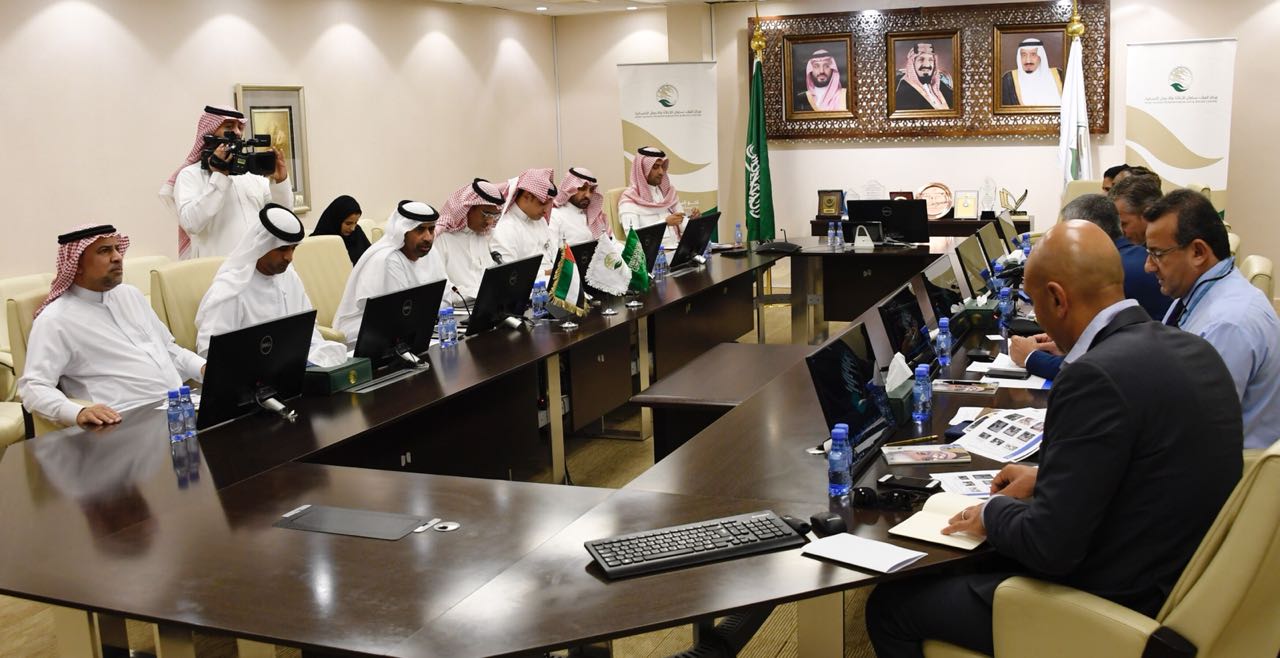
RIYADH, SAUDI ARABIA: The coordinating council for following-up the joint financial contribution of Saudi Arabia and UAE for funding the 2018 Yemen Humanitarian Response Plan (YHRP) recently held their second meeting at King Salman Humanitarian Aid and Relief Center (KSrelief) headquarters in Riyadh.
The meeting attended by the following officials:
· Engineer Ahmed Al Baiz – KSrelief Assistant Supervisor General of Operations and Programs
· Sultan Al Shamsi – Assistant Minister of Foreign Affairs and International Cooperation for International Development Affairs, United Arab Emirates
· Stephen Anderson – WFP Representative and Country Director to Yemen
· Abdul Majid Yahiya – Director of WFP Office for the Gulf Cooperation Council (GCC)
· Ahmed Mohsen – Senior Regional External Relations Officer at UNHCR
· Jayne Mbakaya – the Representative of OCHA
· Izumi Conway – the Representative of WFP
Lise Grande, Resident Coordinator & Humanitarian Coordinator in Yemen and Dr. Nevio Zagaria, WHO Representative to Yemen participated remotely through a conference call.
The meeting participants discussed recent developments in the 2018 Yemen Humanitarian Response Plan (YHRP).
Engineer Al Baiz stated that the purpose of the meeting was to follow-up and evaluate projects and programs implemented under the Saudi-UAE pledge to Yemen – which amounted to USD 930 million. This pledge was provided in response to the largest-ever appeal from humanitarian organizations to provide urgent assistance to Yemen.
In a press statement, Abdul Majid Yahiya expressed his pleasure at visiting KSrelief for the first time, noting that cooperation between the Kingdom and WFP has been ongoing since the 1960s. The Kingdom was honored in 2008 for pledging USD 500 million, which at that time was the largest donation WFP had ever received from a single donor country. He added that the Kingdom supports WFP's activities in many countries, and has been particularly involved in WFP's projects in Yemen, Syria, Bangladesh, and South Sudan.
The director clarified that the aim of the meeting was to coordinate response to the humanitarian situation in Yemen, and to identify ways to further support the Kingdom, the UAE and other humanitarian organizations in Yemen. The Saudi-UAE pledge to Yemen has reached USD 930 million – USD 440 million of which is channeled through the WFP. "We look forward to further cooperation," he added.
Stephen Anderson thanked the Kingdom and the UAE for their generous support to UN agencies – and to WFP in particular. This support, he added, allows the organization to increase the number of food aid beneficiaries in 2018 to 9 million people. He remarked that this support is particularly important for Yemen, which is suffering one of the world's largest humanitarian crises.
Food security is a priority for the Yemeni people. More than 18 million people do not know when they will eat their next meal, and 8.4 million people are suffering from extreme hunger.
Mr. Anderson expressed his sincere thanks and appreciation for the joint Saudi-UAE support, the results of which were clear on the ground in Yemen. "Thanks to this support," he explained, "we have also been able to flexibly and efficiently respond to natural disasters in Yemen, especially on the island of Socotra earlier this year, where we were able to respond quickly to the immediate needs of the population there."